


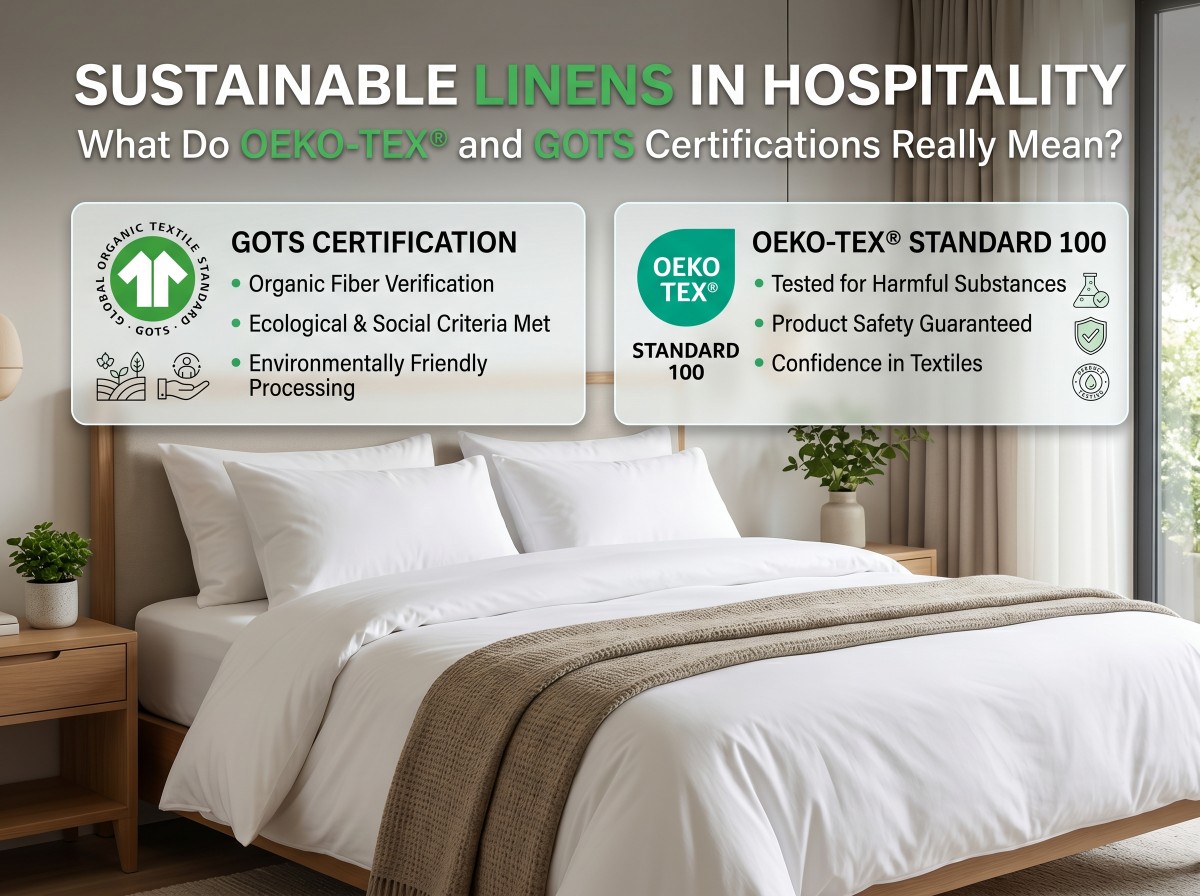
Sustainable Linens in the Hospitality Industry: What Do OEKO-TEX and GOTS Certifications Mean?
Sustainability has become an important priority in the hospitality industry. Today’s guests are increasingly conscious of environmental responsibility and often prefer hotels, resorts, spas, and wellness facilities that demonstrate sustainable business practices.
One area where hospitality businesses can make a significant impact is through their choice of textiles. Towels, bathrobes, bedding, bath mats, and pool towels are used daily and replaced regularly, making them an important part of a property’s environmental footprint.
When researching sustainable hospitality textiles, two certifications frequently stand out: OEKO-TEX® and GOTS (Global Organic Textile Standard). Understanding what these certifications mean can help hospitality businesses make informed purchasing decisions.
1. Why Sustainable Linens Matter in Hospitality
Hospitality textiles undergo frequent use and intensive laundering throughout their lifespan. Choosing sustainable products can help businesses reduce environmental impact while maintaining high standards of guest comfort.
Sustainable linens can contribute to:
- Reduced environmental footprint
- Improved brand reputation
- Enhanced guest trust
- Support for sustainability goals
- Healthier indoor environments
- Long-term operational value
As sustainability becomes a growing priority for travelers, certified textiles can help hotels demonstrate their commitment to responsible business practices.
2. What Is OEKO-TEX® Certification?
OEKO-TEX® is one of the world’s most recognized textile certification systems. It focuses primarily on ensuring that textile products are tested for harmful substances that could affect human health.
Products certified under STANDARD 100 by OEKO-TEX® undergo extensive testing to verify that they meet strict safety requirements.
What Does OEKO-TEX® Test For?
- Harmful dyes
- Heavy metals
- Formaldehyde
- Pesticide residues
- Allergenic chemicals
- Other potentially hazardous substances
The certification helps ensure that textiles are safe for direct contact with the skin.
Benefits of OEKO-TEX® Certified Linens
- Greater guest safety
- Quality assurance
- Increased consumer confidence
- Support for responsible sourcing initiatives
- Improved brand credibility
For hospitality businesses, OEKO-TEX® certification provides reassurance that products have been tested according to internationally recognized safety standards.
3. What Is GOTS Certification?
The Global Organic Textile Standard (GOTS) is one of the leading standards for organic textiles worldwide. Unlike OEKO-TEX®, which primarily focuses on product safety, GOTS evaluates the entire textile production process.
To achieve certification, products must comply with strict environmental and social criteria throughout the supply chain.
What Does GOTS Cover?
- Certified organic fibers
- Environmentally responsible processing
- Restrictions on harmful chemicals
- Wastewater treatment requirements
- Ethical labor practices
- Social compliance standards
GOTS certification provides assurance that a product has been manufactured according to comprehensive sustainability requirements.
Benefits of GOTS-Certified Hospitality Linens
- Verified organic materials
- Reduced environmental impact
- Responsible manufacturing practices
- Support for ethical production
- Stronger sustainability credentials
For hotels and resorts seeking environmentally responsible solutions, GOTS certification is often considered one of the most trusted standards available.
4. OEKO-TEX® vs GOTS: Understanding the Difference
Although both certifications support sustainability and quality objectives, they focus on different aspects of textile production.
| Feature | OEKO-TEX® | GOTS |
|---|---|---|
| Tests for Harmful Substances | ✔ | ✔ |
| Organic Fiber Requirement | ✖ | ✔ |
| Environmental Production Standards | Limited | ✔ |
| Ethical Labor Requirements | ✖ | ✔ |
| Consumer Safety Focus | ✔ | ✔ |
Both certifications provide value, but they address different priorities within sustainable textile production.
5. Why Certifications Matter for Hotels and Hospitality Businesses
Today’s travelers increasingly appreciate businesses that demonstrate environmental responsibility and transparency.
Certified textiles can help hospitality businesses:
- Support sustainability initiatives
- Strengthen guest confidence
- Enhance brand reputation
- Meet corporate responsibility objectives
- Differentiate from competitors
- Demonstrate commitment to quality
These advantages can positively influence guest perception and overall brand value.
6. Sustainable Linens and Long-Term Value
Sustainability is not only about environmental responsibility. It can also contribute to long-term operational efficiency.
High-quality certified textiles often provide:
- Greater durability
- Better wash performance
- Longer product lifespan
- Reduced replacement frequency
- Lower lifecycle costs
Choosing quality products helps hospitality businesses balance sustainability goals with financial performance.
7. How to Choose Sustainable Hospitality Linens
When evaluating hospitality textiles, businesses should consider more than just price.
Important factors include:
- Certification credentials
- Material quality
- Product durability
- Supplier transparency
- Environmental impact
- Long-term performance
The most sustainable textile is often one that combines responsible production with exceptional longevity.
Final Thoughts
As sustainability becomes increasingly important in the hospitality industry, certifications such as OEKO-TEX® and GOTS provide valuable guidance when selecting linens and textiles.
While OEKO-TEX® focuses on testing products for harmful substances, GOTS takes a broader approach by evaluating organic materials, environmental responsibility, and ethical manufacturing practices.
For hotels, resorts, spas, and wellness facilities, understanding these certifications can help create safer guest environments, strengthen sustainability efforts, and support responsible purchasing decisions.
At Serenlinn, we believe that comfort, quality, durability, and sustainability should work together. By choosing responsibly produced hospitality textiles, businesses can create exceptional guest experiences while contributing to a more sustainable future.